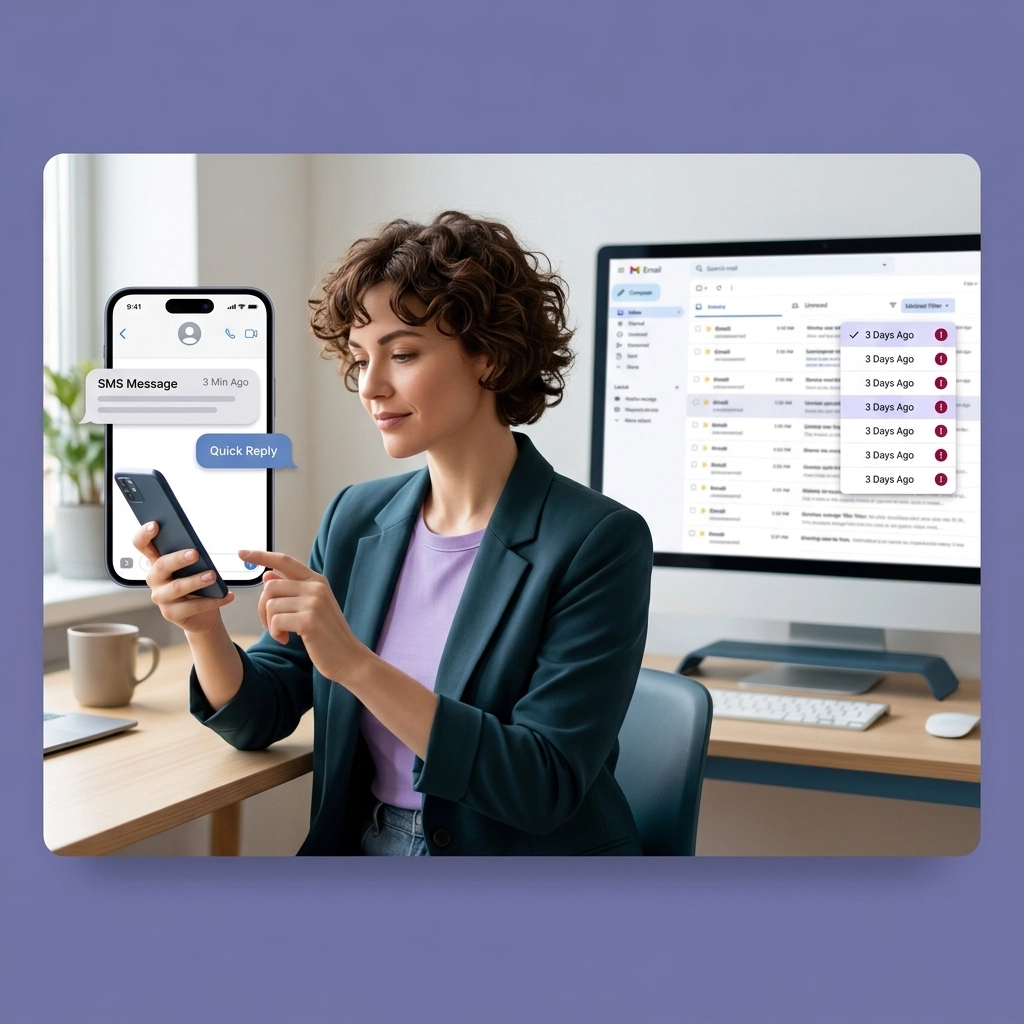


A Kingsville, Ontario retailer recently shared a number that should bother every local business owner. She printed 500 flyers with a 20% off coupon, paid a student to distribute them door to door, and waited. Three coupons came back. Three. The math worked out to roughly $1.40 per redemption in printing and labour, before counting the discount itself.
The same week, she emailed a promo code to her 1,200-person list. Open rate looked fine on paper. Actual uses? Eight.
Then she tried something different. She sent a text message to 340 customers who had bought from her in the past year. The offer was the same 20%. Forty-seven people walked through the door over the next two days.
That is not a marketing fairy tale. That is what happens when you put a coupon directly into the device people check 96 times a day, written in a way that respects their time and gives them a reason to act now.
Why Coupons Fail Almost Everywhere Else
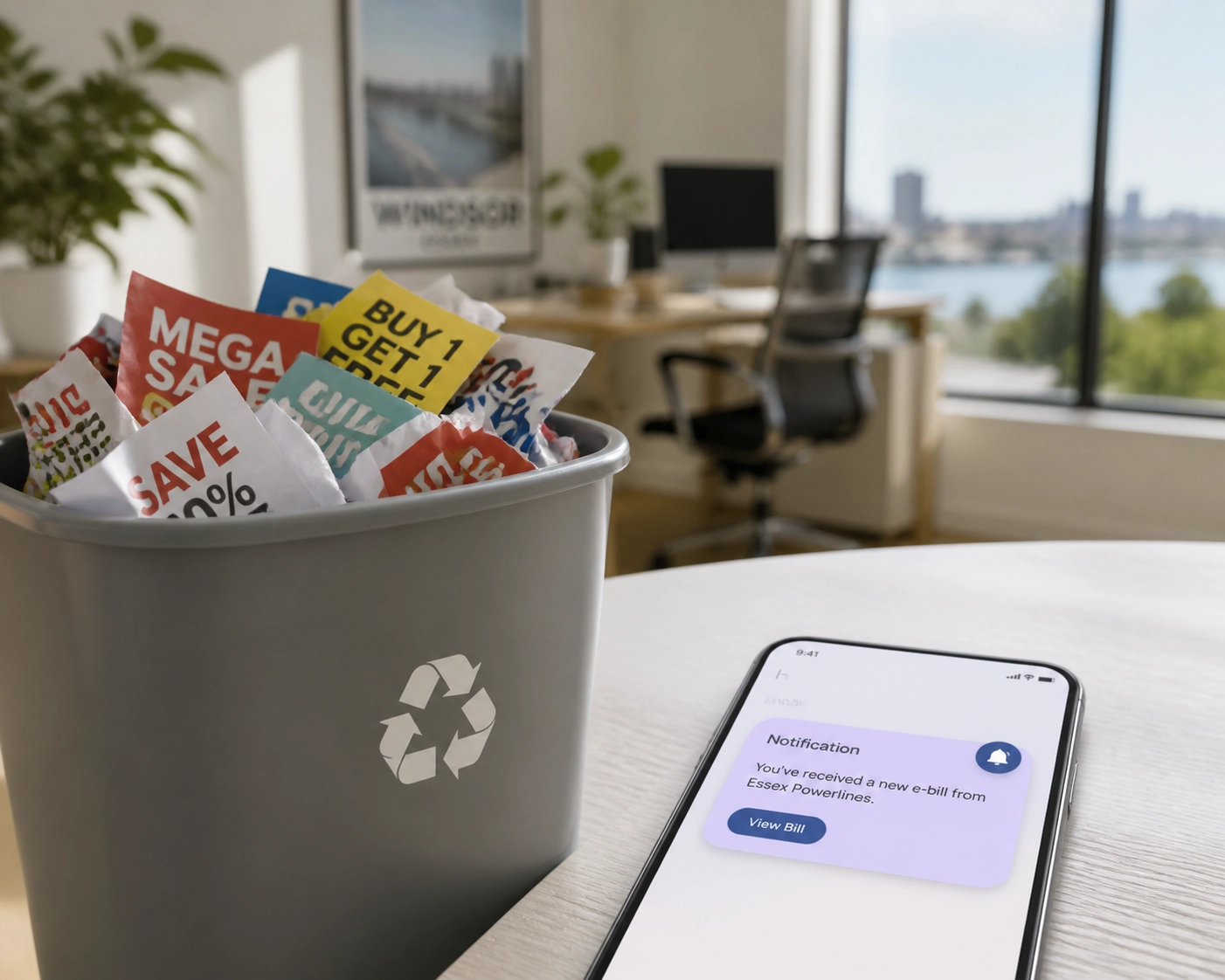
Flyers, email promo codes, social media offers, and loyalty-app push notifications all share the same fundamental problem. They sit in places customers either ignore, scroll past, or never open in the first place.
Email marketing averages around a 20% open rate for retail, and of those opens, only a fraction click through. Click through is not redemption. A customer has to open, read, decide, remember the code, drive to your business, and use it before it expires. Each step is a leak in the bucket.
Flyers have it worse. Most go from mailbox to recycling without ever being read. The few that survive get pinned to a fridge and forgotten.
Social media offers compete with everything else in the feed. A 20% off post from a local shop sits beside vacation photos, news, ads from national chains, and three dozen other things screaming for attention.
Text messages are different. They are read, almost always within minutes, and they sit in a thread the customer can scroll back to without hunting through a junk folder. That delivery mechanism is the single biggest reason text coupons outperform every other channel a small business has access to. (For more on why text messages get read while other channels get ignored, see the companion piece on why customers actually read texts.)
The Numbers That Should Change Your Mind
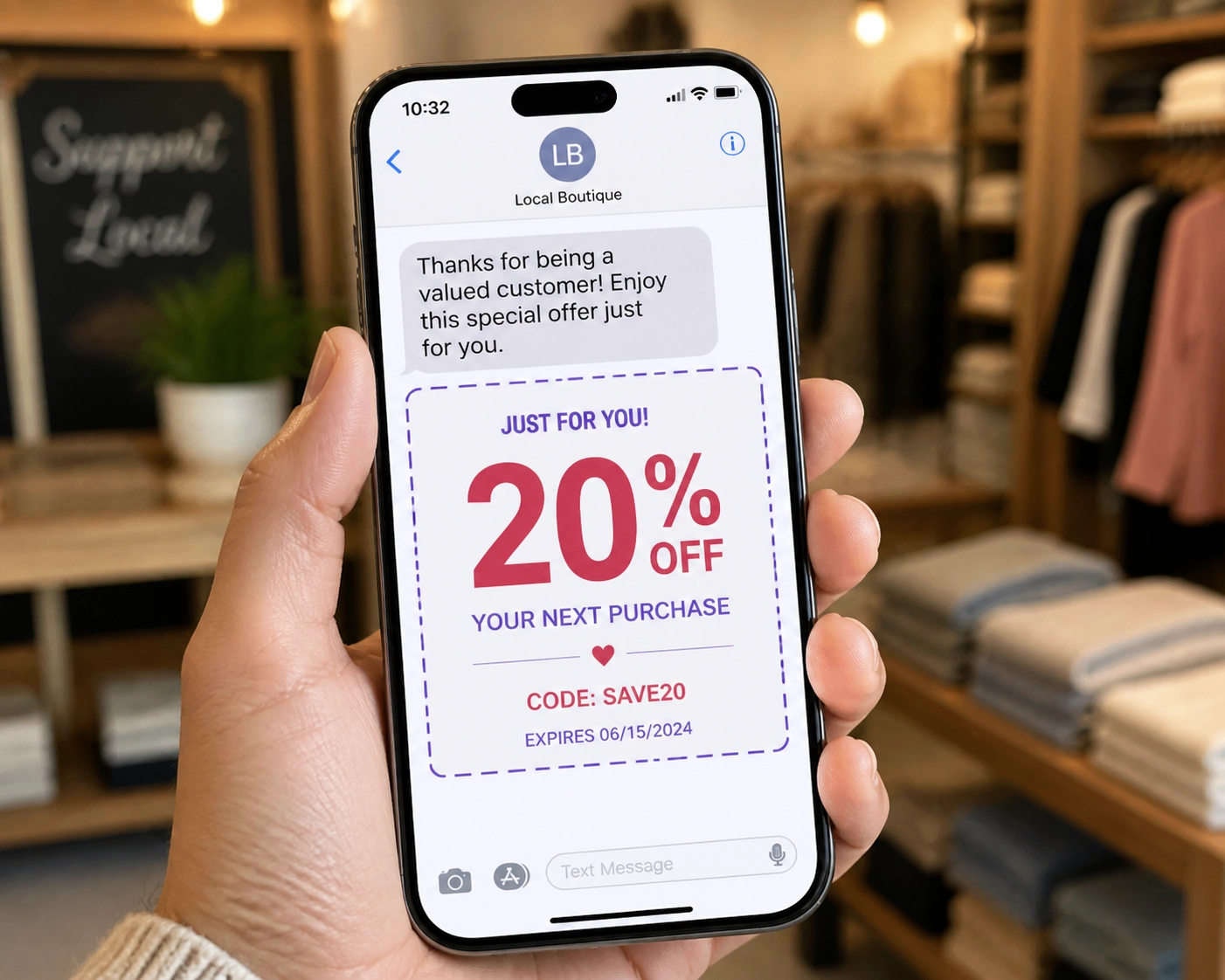
Industry research across North American retail consistently shows SMS coupons redeem at roughly 10 to 30 times the rate of email or print equivalents. Typical email coupon redemption sits around 1 to 4%. Typical SMS coupon redemption sits between 10 and 30%, with well-targeted campaigns to existing customers hitting 40% or higher.
A 25% redemption rate on a 300-person customer list means 75 people walk in with intent to buy. Compare that to printing 5,000 flyers to generate the same 75 visits, and the cost difference is enormous, never mind the time saved.
The reason SMS works is not magic. It is the combination of four things flyers and emails cannot match: read rate above 95%, read speed measured in minutes not days, a thread the customer can return to, and a delivery channel reserved (in most people’s minds) for things that actually matter.
What Separates a Coupon That Gets Used From One That Gets Ignored
Not every SMS coupon performs. The retailer above has also sent texts that flopped. The difference is not luck. It is four ingredients, and missing any one of them tanks the redemption rate.
Urgency That Is Real
A coupon with a 30-day expiry gets saved for later and forgotten. A coupon expiring in 48 hours gets used. The window matters more than most owners realize.
Best windows for local retail and service businesses:
- 24 to 48 hours for flash promotions and slow-day fills
- 72 hours for moderate offers tied to a weekend
- 7 days maximum for higher-value offers that require planning (a $200 service, a custom order)
Anything longer than a week trains customers to wait, and waiting almost always means forgetting.
Simplicity at the Point of Redemption
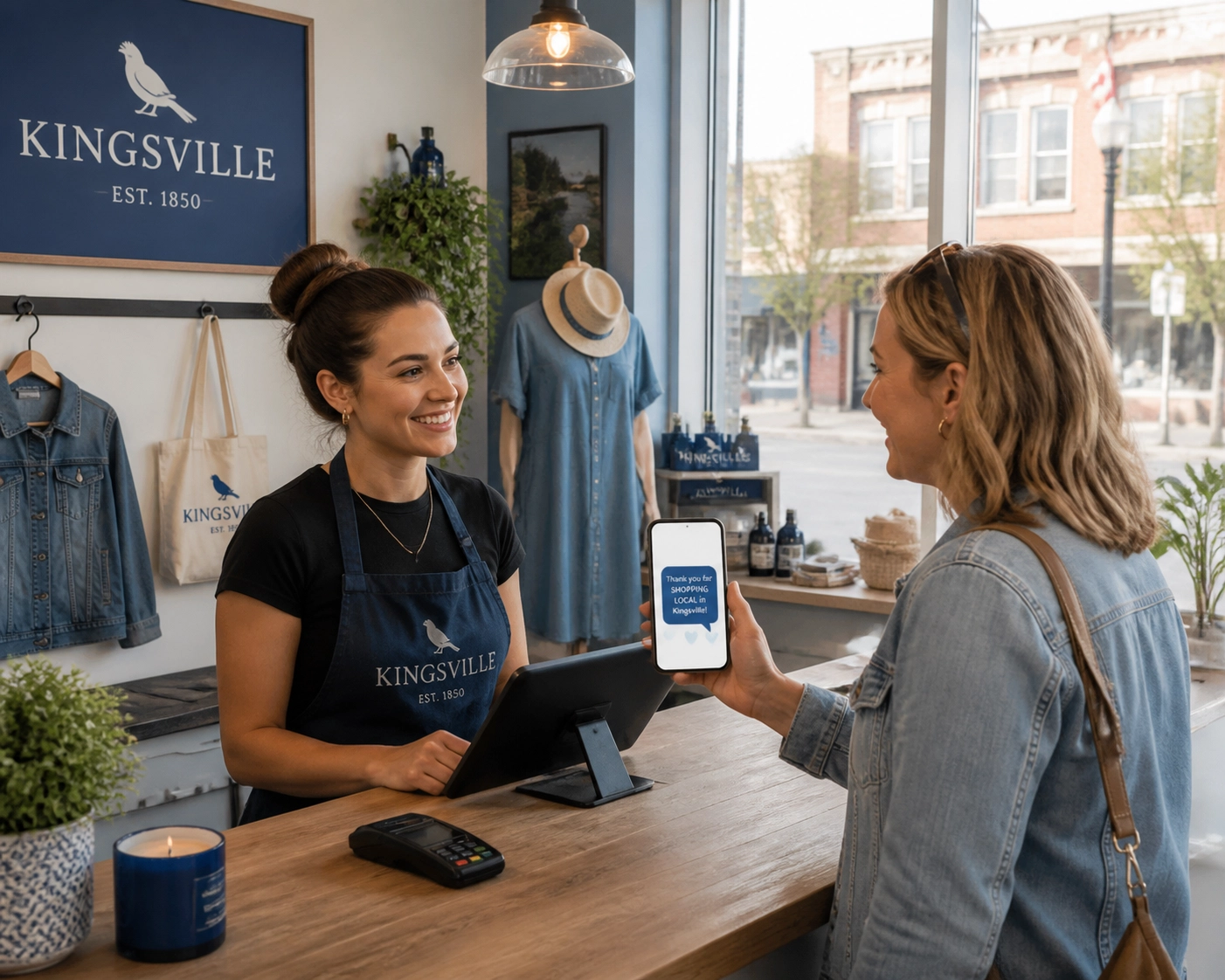
The friction between receiving a coupon and using it kills more redemptions than anything else. If a customer has to remember a code, screenshot something, or pull up an app at the register, you lose a percentage of them at each step.
The best phrase in SMS coupon marketing is “Show this text at checkout.” That is it. No code, no app, no screenshot. The customer holds up their phone. Staff sees the message. Discount applied.
This works because it removes every decision and every memory load from the customer side, and puts the verification on the staff side, which is where it belongs anyway.
Personalization That Means Something
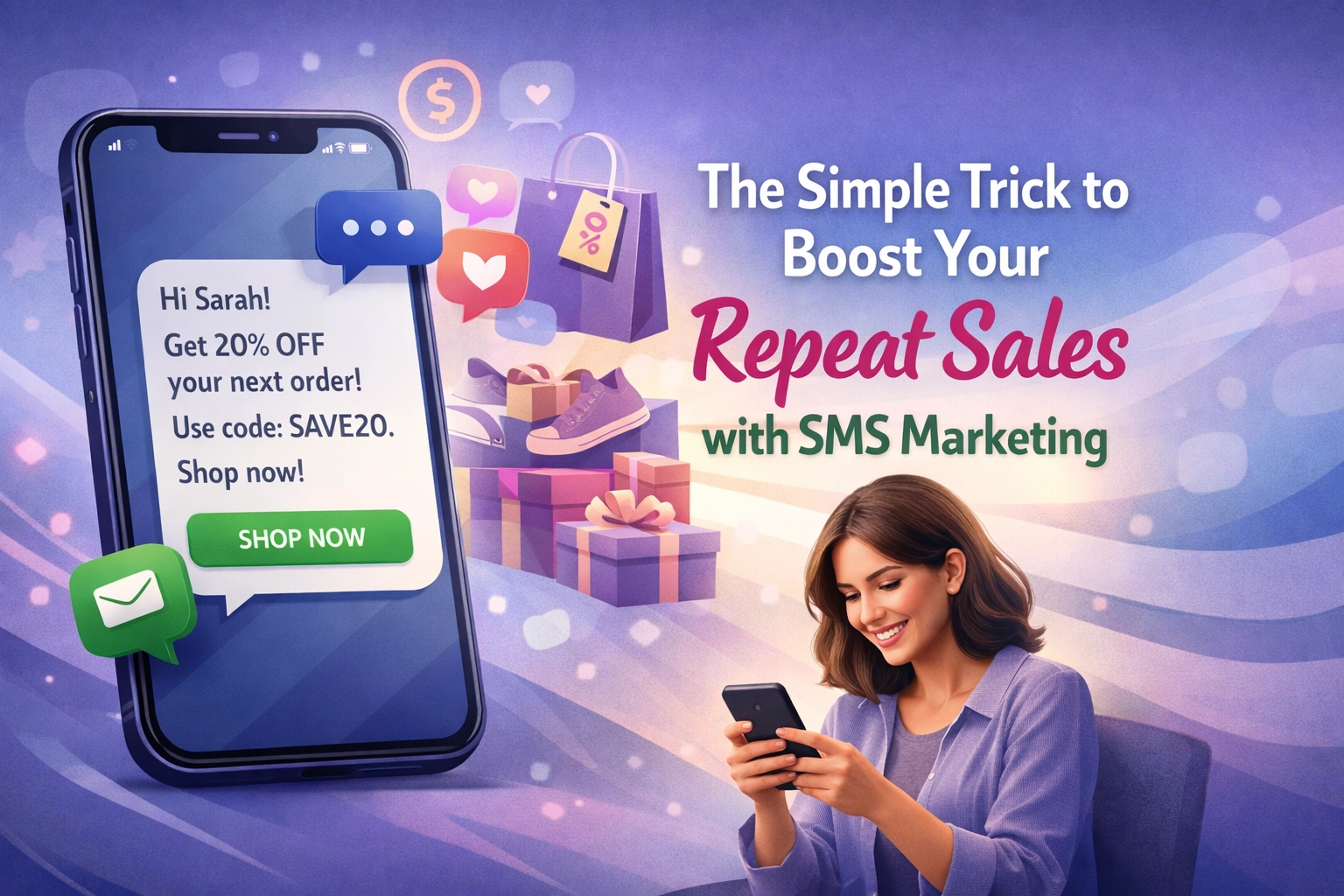
A text that opens with “Hi Sarah” outperforms one that opens with “Dear Valued Customer” by a meaningful margin. Not because Sarah is fooled, but because the message reads as if it was sent to her specifically rather than blasted to a list.
Personalization does not stop at the first name. Segmenting your list, even crudely, makes every offer more relevant:
- Customers who bought in the past 30 days
- Customers who have not bought in 90+ days (win-back territory)
- Customers who bought a specific category (so you can pitch related items)
- Birthday month customers
The simple trick of treating your SMS list like a real list of real people, rather than a broadcast channel, is the difference between a 5% redemption and a 25% redemption. The companion piece on SMS marketing tricks for small businesses covers this segmentation work in more depth.
Value That Is Actually Worth Showing Up For
10% off rarely moves anyone. The customer does the math, decides it is not worth a special trip, and the coupon dies on the vine.
What works, by category:
- Retail: 20% off minimum, or a dollar-value offer ($15 off a $50 purchase)
- Restaurants: free appetizer or dessert with entree, or 25% off the bill
- Salons and personal services: a free add-on service, or a meaningful dollar discount
- Auto and home services: $25 to $50 off a specific service, not a percentage
The rule is simple: would you cross town for this? If the answer is no, the customer will not either.
Five Templates That Work
These are templates a Windsor-Essex retailer or service business can adapt in 10 minutes. Keep them under 160 characters where possible so the message arrives as a single SMS rather than a multi-part text.
1. The Flash Sale
Hi {FirstName}, it’s Paul at [Business]. Today and tomorrow only: 25% off everything in store. Show this text at checkout. Closes 6pm Friday.
Use case: A slow week, end-of-season inventory, or a holiday weekend. Send Wednesday afternoon for a Thursday-Friday window.
2. The Birthday
Happy birthday {FirstName}! Stop by [Business] this week for a free [item] on us. Just show this text. Good until May 13, 2026.
Use case: Automated send the first of each birthday month. This is among the highest redemption rates you will see, often above 35%, because the customer feels recognized rather than marketed to.
3. The Loyalty Reward
{FirstName}, you’ve been with us for over a year and we appreciate it. Here’s $20 off your next visit, no minimum. Show this text. Valid through May 13, 2026.
Use case: Quarterly send to repeat customers. Builds the relationship and reactivates anyone drifting toward a competitor.
4. The Slow-Day Fill
{FirstName}, Tuesday is quiet at [Business] and we’d love to see you. 30% off any service booked for Tuesday this week. Reply or call to book.
Use case: Restaurants, salons, and service businesses with predictable slow days. Send Sunday evening or Monday morning. Turns dead inventory (empty chairs, empty tables, empty appointment slots) into revenue.
5. The Seasonal
{FirstName}, winter tires are 15% off this week at [Business]. Snow’s coming. Book by Friday and we’ll get you in before the weekend. Show this text.
Use case: Tie the offer to a real seasonal trigger (weather, holidays, back to school). The relevance does half the persuasion work for you.
When to Send (and When Not To)
Timing changes redemption rates by 30% or more, with the same offer and the same list. Get this wrong and a great coupon underperforms a mediocre one sent at the right hour.
Best send windows for most local businesses:
- Tuesday to Thursday, 10am to 1pm for retail and services
- Thursday afternoon, 2pm to 5pm for weekend offers
- Sunday evening, 6pm to 8pm for Monday and Tuesday promotions
Avoid:
- Before 9am (reads as intrusive, especially weekends)
- After 8pm (intrusive, and in some provinces legally questionable)
- Monday morning (customers are buried in their week)
- Friday after 5pm for offers expiring Saturday (too little response time)
The CRTC’s guidance under CASL is that commercial messages should be sent during reasonable hours. There is no fixed time written into the law, but 9am to 8pm local time is the safe operating window. Outside that, you are inviting complaints regardless of consent.
CASL Compliance Is Not Optional
Canada’s Anti-Spam Legislation governs commercial electronic messages, including SMS, sent to or from Canada. The fines for getting this wrong run up to $10 million for businesses. Most local owners will never face that, but a single CRTC complaint can trigger a process you do not want to spend a week answering.
The three rules to follow:
1. Get Consent Before Sending
Express consent is the gold standard. The customer actively opted in: a check box at checkout, a sign-up form, a text-to-join keyword, or a verbal yes with a record of it. Implied consent (existing customer relationship within 24 months) is allowed for some scenarios but is weaker ground, and the rules around it are easy to trip over. When in doubt, get express consent.
2. Identify Yourself in Every Message
Every commercial SMS must include the business name. “[Business Name]” early in the text covers this. Do not send anonymous-looking messages from a number with no context.
3. Provide a Way to Unsubscribe
Every commercial SMS must include a clear, free, working unsubscribe mechanism. “Reply STOP to unsubscribe” is the standard, and any reputable SMS platform handles this automatically. If a customer texts STOP, they come off the list immediately. No exceptions, no follow-up message asking why.
Keeping records matters. If a complaint is ever filed, you need to show when the customer opted in, how, and what they agreed to receive. Most SMS platforms log this automatically, but verify yours does before you scale up.
Tracking What Actually Worked
A coupon campaign without tracking is just hoping. Two methods cover most small-business needs without requiring enterprise software.
Unique Codes Per Campaign
Even if the customer never types the code (because they just show the text), the staff member at checkout can log the campaign source in 5 seconds. Use short, memorable codes tied to each campaign:
- FLASH48 for flash sales
- BDAY for birthday offers
- LOYAL20 for loyalty rewards
- TUESFILL for slow-day promotions
At the end of the week, you can pull a count by code and see which campaigns drove which traffic.
POS-Level Tracking
If your point of sale system supports custom discount buttons or promo codes, set up one per campaign type. Staff applies the right code at checkout, and the system tracks redemption volume, dollar value, and average ticket size automatically.
The metrics that actually matter:
- Redemption rate: redemptions divided by messages sent
- Average ticket value on redeemed coupons: did the discount drag the basket size down, or did customers buy other things too?
- Net revenue per message sent: total revenue from the campaign divided by messages sent, after discount
That last number is the one that tells you whether a campaign was actually worth running. A 30% redemption rate sounds great until you realize the average ticket was only the discounted item and nothing else.
Building This Into a Repeatable System
Most local businesses do not lose at SMS marketing because they pick the wrong words. They lose because they send a coupon once, get good results, and then forget about it for four months. The customer list goes cold. The next campaign underperforms. The owner concludes “SMS doesn’t work for us” and quits.
The businesses that keep getting 20%+ redemption rates are running a calendar. One or two campaigns per month, varied by template, tracked by code, refined by what the numbers say. It is not a creative exercise after the first month. It is an operational one.
Build the calendar before you start. Decide which weeks get flash sales, which get loyalty rewards, which get seasonal pushes. Automate the birthday messages so they fire without thinking about them. Review the redemption data monthly and adjust which offers and which timing windows are pulling the most weight.
A Kingsville, Ontario business with 400 customers on a clean SMS list, running two well-built campaigns a month, will out-earn the same business spending three times as much on flyers, social ads, and email. The channel rewards the work, and the work is not complicated. It just has to happen on a schedule.
Where to Start
If your SMS list is non-existent, start collecting. Add a sign-up at the register, on the website, on receipts. Offer something small (a one-time 15% off) for joining. Within 90 days, most local businesses can build a 200-to-500-person list from existing customer traffic alone.
If your list exists but is dusty, start with a re-engagement message. A simple, value-led offer to confirm who is still active. The list that comes out the other side is smaller but cleaner, and clean lists redeem.
If you are already sending but redemptions are weak, audit against the four ingredients above: urgency, simplicity, personalization, value. One of them is almost certainly missing.
Doorways Into Your Business builds and runs SMS coupon campaigns for small and medium businesses across the Windsor-Essex region, from list-building and consent capture through templates, send schedules, CASL compliance, and POS-level tracking. If your promotions are landing flat and you want a system that actually moves customers through the door, book a free consultation at https://blog.diyb.ca/contact-diyb.