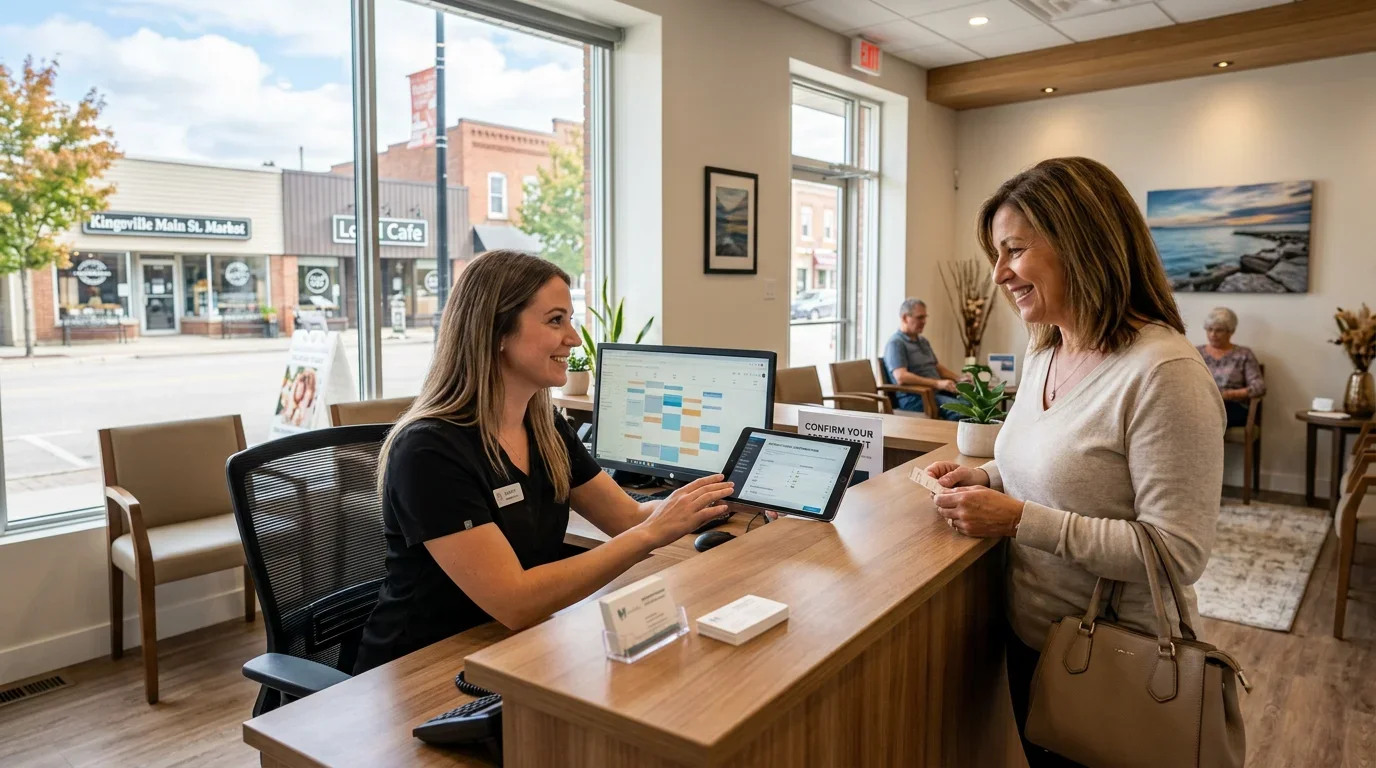

A Kingsville, Ontario service business owner told me last month that his customers prefer to call. “My people aren’t online bookers. They like to talk to a real person.” He said this while glancing at his phone, which had three missed calls from that morning and a voicemail he hadn’t returned yet.
His customers don’t prefer to call. They call because calling is the only option he gives them. And every call he misses is a customer who either books with a competitor or never books at all.
This is one of the most common, most expensive assumptions small business owners make. It feels true because the customers who do reach you are, by definition, the ones who called. You never hear from the ones who hung up, gave up, or went elsewhere. The silence is invisible. The lost revenue is real.
The Assumption vs. The Data
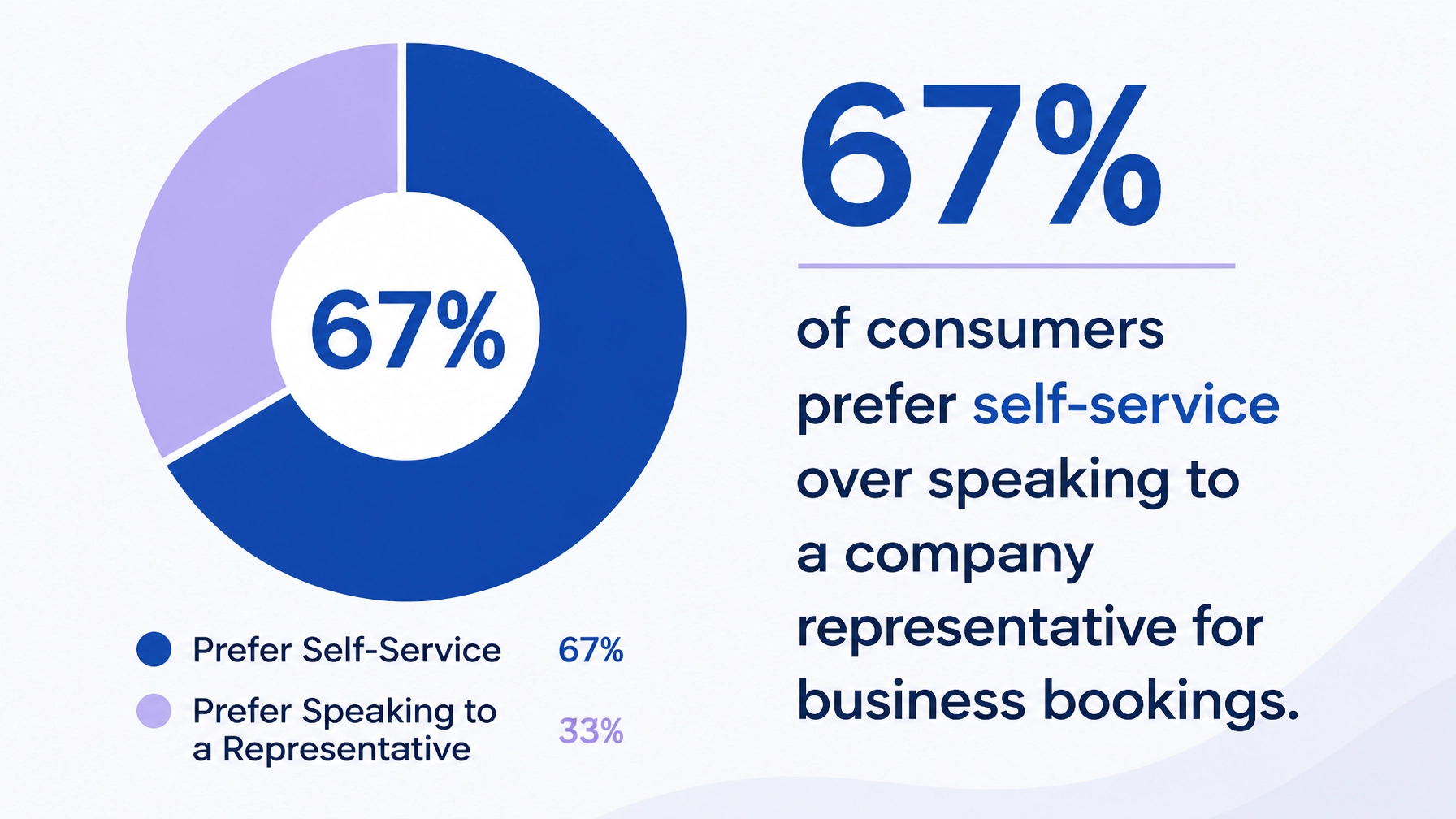
The belief that “my customers like to call” usually comes from a sample of one: the owner. If you grew up doing business by phone, picking up the phone feels natural. You assume your customers feel the same way. They don’t.
A 2023 study from ReviewTrackers found that 67% of consumers prefer self-service over speaking to a company representative when given the choice. Booking is one of the most common self-service tasks. Salesforce research puts the number even higher for routine transactions like appointments, reservations, and service bookings — closer to 75%.
The gap between owner perception and customer behaviour is wide. Owners ask, “Do my customers want to book online?” and answer it by thinking about the customers they already serve. The right question is, “How many customers tried to book and gave up because phone was the only option?” That question has a much less comfortable answer.
When you only offer phone booking, you are not measuring preference. You are measuring tolerance. The customers who reach you are the ones willing to tolerate the friction. The ones who weren’t willing are gone, and you never knew they were there.
The Hidden Cost of Phone-Only Booking
Phone booking sounds simple. Customer calls, you answer, you book the appointment. In practice, almost none of those steps happens cleanly.
Hold times and missed calls
Most small businesses can’t answer every call. The owner is with a customer, the front desk is on another line, or it’s lunch and nobody’s at the phone. Industry data on small business phone behaviour consistently shows that 30 to 50% of inbound calls go unanswered. Of those, only a fraction leave a voicemail. Most callers simply hang up and try the next business on their list.
Voicemail purgatory
When customers do leave a voicemail, what happens next? The business calls back, the customer doesn’t answer, the business leaves a voicemail, the customer calls back, the business is busy again. This is phone tag, and it kills bookings. A two-day gap between the initial call and a confirmed appointment is enough time for a customer to lose interest, get distracted, or book with someone else. (For a longer treatment of how phone tag specifically damages small business revenue, see the pillar article Stop Playing Phone Tag: How Small Businesses Lose Customers to Communication Gaps.)
Business hours only
Phones get answered when your business is open. Customers, however, think about booking when they think about it — which is often at 9 PM on a Tuesday, on a Sunday morning, or during their own work hours when calling a business is awkward. A customer who needs to book an oil change is thinking about it on the drive home from work. By the time they’re free to call, you’re closed. By the time you’re open, they’ve forgotten.
The conversation tax
Even a successful phone booking takes time. You ask for the customer’s name, phone number, what they need, when they’re available. You check the calendar. You suggest times. They check their own schedule. You book it. You confirm the spelling. A booking that takes 30 seconds online takes three to five minutes by phone, and both parties have to be available at the same time.
Multiply this by every booking your business handles. Now multiply it by every booking your business doesn’t handle because the friction was too high.
What Online Booking Actually Does
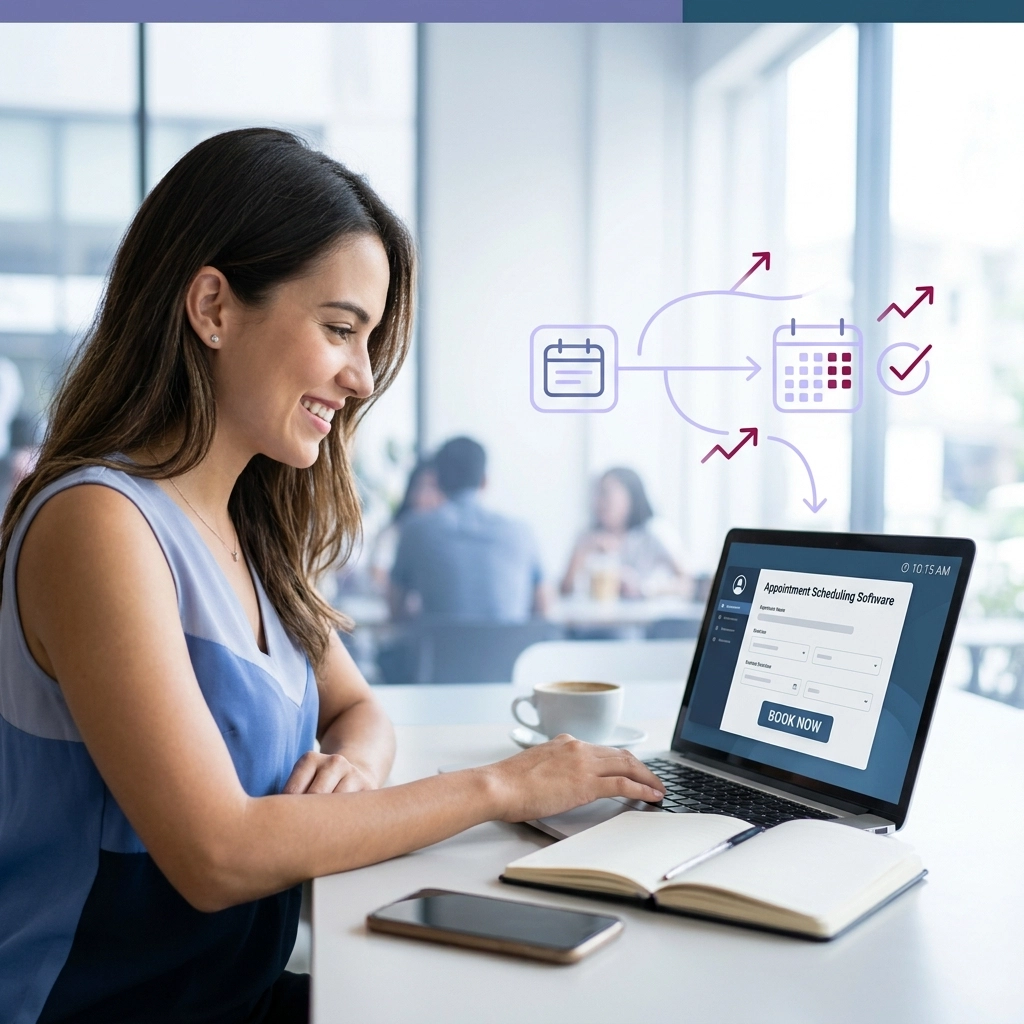
Online booking solves every one of these problems, and it does so without removing the phone option for customers who genuinely prefer it.
24/7 availability
A booking page never sleeps. The Sunday morning customer books on Sunday morning. The 9 PM customer books at 9 PM. The customer thinking about it during their lunch break books during their lunch break. You wake up, open the booking system, and the appointments are already there.
For service businesses in the Windsor-Essex region — where many customers work shift schedules, drive across the region for appointments, or run small businesses themselves with limited free time during business hours — this is not a minor convenience. It is the difference between being bookable and not being bookable.
30 seconds, no conversation
A good online booking flow takes 30 to 60 seconds. The customer picks a service, picks a time slot, enters their name and contact details, and confirms. No small talk, no calendar negotiation, no holding. For introverted customers, busy customers, and anyone who finds phone calls mildly stressful (which is most people under 40), this is a vastly better experience.
Instant confirmation
The customer gets an immediate email or text confirming the appointment. They don’t have to remember to write it down. They don’t have to wonder if it was actually booked. They have a record they can refer to, forward to a spouse, or add to their calendar.
No phone tag, ever
The booking either happens or it doesn’t. There is no callback, no voicemail, no two-day gap. The conversion event and the appointment booking are the same event.
The Generational Factor (And Why It’s Not What You Think)
The easy version of this argument is: “Young people don’t like phones, old people do, so it depends on your customer base.” That version is wrong in both directions.
Younger customers actively avoid calls
For customers under 40, a phone call is not a neutral communication channel. It is the highest-friction option available. A 2019 BankMyCell survey found that 75% of millennials avoid phone calls because they’re time-consuming, and a majority described unscheduled calls as stressful or anxiety-inducing. For this group, “call to book” is not a feature. It is a barrier.
If your customer base skews under 40 and you only offer phone booking, you are not serving them. You are filtering them out.
Older customers are more online than you think
The assumption that customers over 60 prefer phone is increasingly outdated. Pew Research’s ongoing tracking of internet use among older adults shows that 75% of Americans aged 65 and older use the internet, and the majority of them book appointments, manage banking, and handle routine transactions online. The pandemic accelerated this dramatically. A 70-year-old in 2024 is not a 70-year-old from 2010.
The customers who genuinely prefer phone are real, but they are a smaller and shrinking group. They are not your entire customer base. And critically, offering online booking does not remove the phone option for them. It adds a channel without subtracting one.
The real generational story
The honest version of the generational argument is this: every year that passes, the share of customers who prefer online booking grows and the share who prefer phone shrinks. A business that is phone-only today is serving fewer customers each year than it did the year before, even if total demand for its services is flat or growing. The decision to add online booking is not just about today’s customers. It is about the customers you will have in three years.
The Hybrid Approach: Both, But Lead With Online
The right answer for almost every small business is not to abandon phone booking. It is to add online booking as the primary, prominent option, and keep phone as the secondary fallback for customers who prefer it or for situations the booking system can’t handle.
A few practical principles:
- Put online booking prominently on your homepage, your Google Business Profile, your email signature, and your social media bios. A “Book Now” button should be the most visible call to action on every page of your website.
- Keep your phone number visible, but treat it as the secondary option, not the primary one. “Or call us at…” is fine. “Call us to book” as the only option is not.
- Use online booking for routine appointments. Reserve phone for complex jobs, custom quotes, or situations where the customer genuinely needs to talk through their needs before scheduling.
- Set up your phone system to direct callers to online booking when appropriate. A voicemail greeting that says “For faster service, book your appointment at [URL]” captures bookings even when nobody picks up the phone.
This is not an either-or decision. The businesses that win are the ones that meet customers on whatever channel the customer prefers, and that means offering more than one channel.
The Conversion Data
When small businesses add online booking to a previously phone-only operation, the impact on bookings is consistent and significant. Industry case studies and platform data from booking systems like Square, Calendly, Acuity, and Booksy consistently show conversion increases of 20 to 35% in the first six months after implementation.
The increase comes from three sources:
After-hours bookings that previously didn’t happen at all. Booking platform data routinely shows that 30 to 40% of online bookings occur outside standard business hours. These are not bookings shifted from phone to online. They are bookings that would never have happened otherwise.
Recovered missed calls. When a customer calls and doesn’t reach you, a well-placed online booking link in your voicemail greeting, your Google Business Profile, or an automated text-back captures a portion of those lost opportunities.
Lower-friction conversion for ambivalent customers. A customer who is 60% sure they want to book is more likely to follow through on a 30-second online flow than on a 5-minute phone call. Online booking converts the maybes.
For a small business doing 50 bookings a month at an average ticket of $150, a 25% conversion lift is roughly $22,500 in additional annual revenue — from a system that costs $20 to $50 a month to operate. The ROI math is rarely close.
Integration: Where Online Booking Really Pays Off
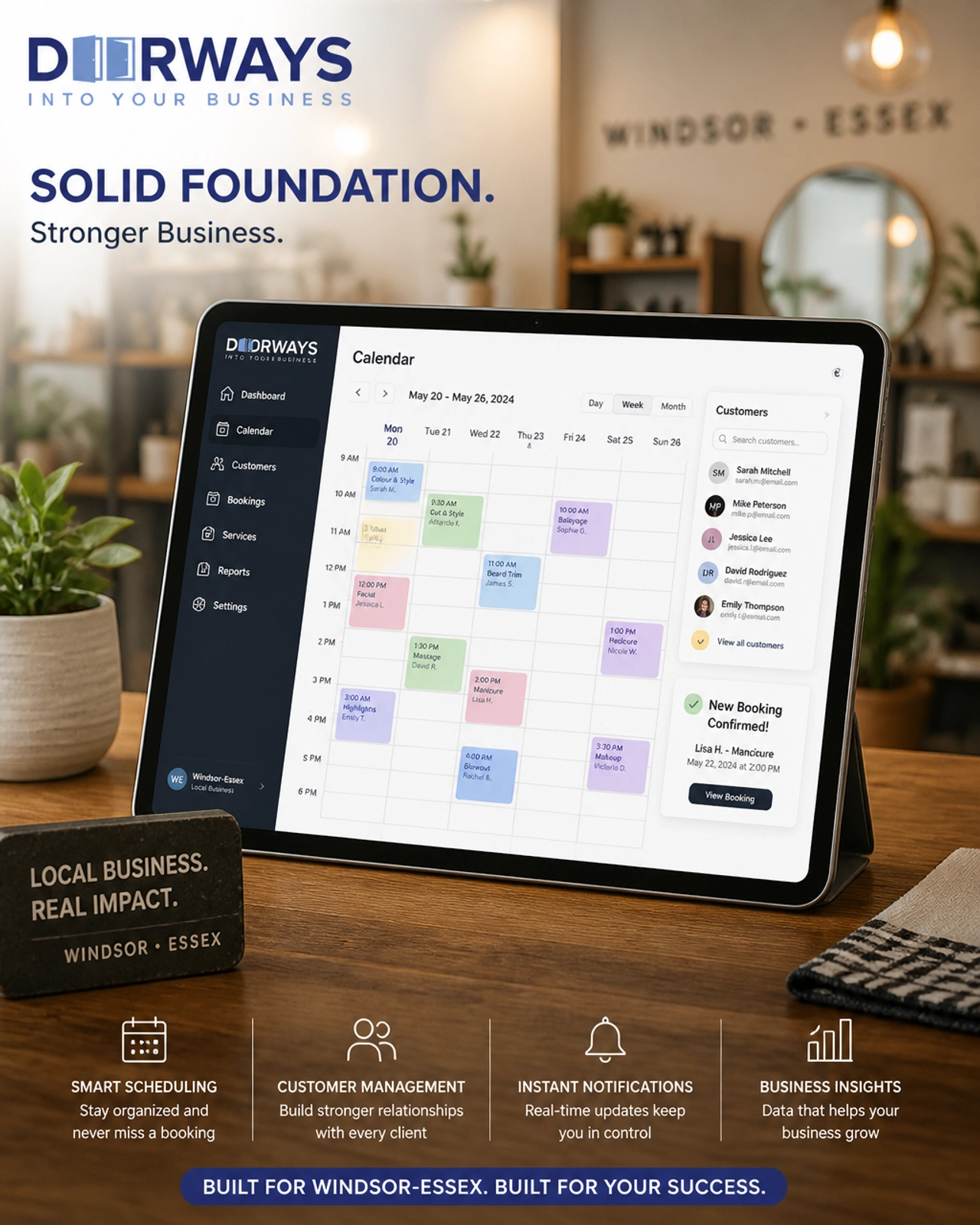
The case for online booking gets stronger when the booking system integrates with the rest of your operations. A standalone booking page is useful. A booking page wired into your calendar, your CRM, your reminder system, and your customer database is genuinely transformative.
Calendar sync
The booking, the customer, and the appointment slot land in your calendar automatically. No transcription, no double-entry, no errors from misheard phone numbers.
CRM and customer history
Every booking creates or updates a customer record. Over time, you build a database of who books what, how often, and when. This is the foundation of follow-up marketing, repeat-business campaigns, and review requests — all of which are far more valuable than the booking itself.
Automated reminders
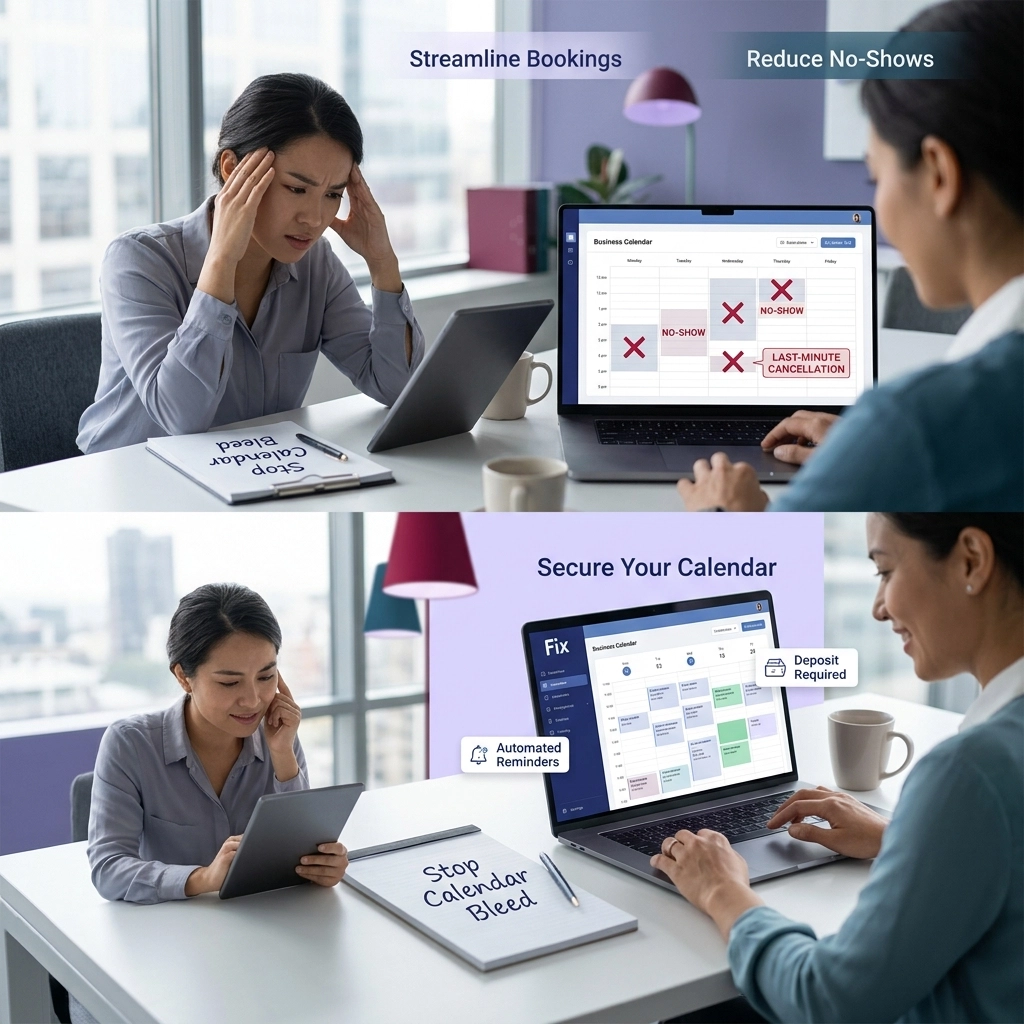
The system sends confirmation immediately, then a reminder 24 hours before the appointment, then a follow-up after. No-show rates drop sharply. Industry data on appointment reminders shows reductions of 25 to 40% in no-shows when automated reminders are added to an existing booking process.
Review and follow-up triggers
A completed appointment can automatically trigger a review request, a thank-you email, or a follow-up offer. The work of staying in front of past customers happens in the background, not on your already-overloaded to-do list.
A phone booking gives you an appointment. An integrated online booking gives you an appointment, a customer record, a reminder sequence, a review opportunity, and a follow-up trigger — for the same effort.
What This Means for Your Business
If you are running a service business in the Windsor-Essex region and you only offer phone booking, the data is clear. You are turning away a meaningful percentage of customers who want to book with you but won’t tolerate the friction of calling. You are losing every potential customer who tries to reach you outside business hours. You are spending time on phone tag that should be spent on actual work. And every year, the math gets worse, not better.
The fix is not complicated. Add an online booking system, link it prominently from your website and Google Business Profile, integrate it with your calendar, and keep the phone as a secondary option for the customers who want it.
The businesses that do this don’t see their phone bookings disappear. They see their total bookings go up, while their phone volume goes down to the level where it can handle well. The customers who prefer phone get better phone service because there are fewer calls to handle. The customers who prefer online get a channel that finally exists. Everyone wins, and the business captures revenue it was previously leaking.
If you’re a Kingsville, Ontario or Windsor-Essex business owner and you want to stop losing customers to a booking process that filters them out, Doorways Into Your Business sets up online booking systems that integrate with your calendar, your CRM, and your customer follow-up — so every booking turns into a long-term customer relationship, not just a single appointment. Book a free consultation at https://blog.diyb.ca/contact-diyb to see what an integrated booking system would look like for your business.