

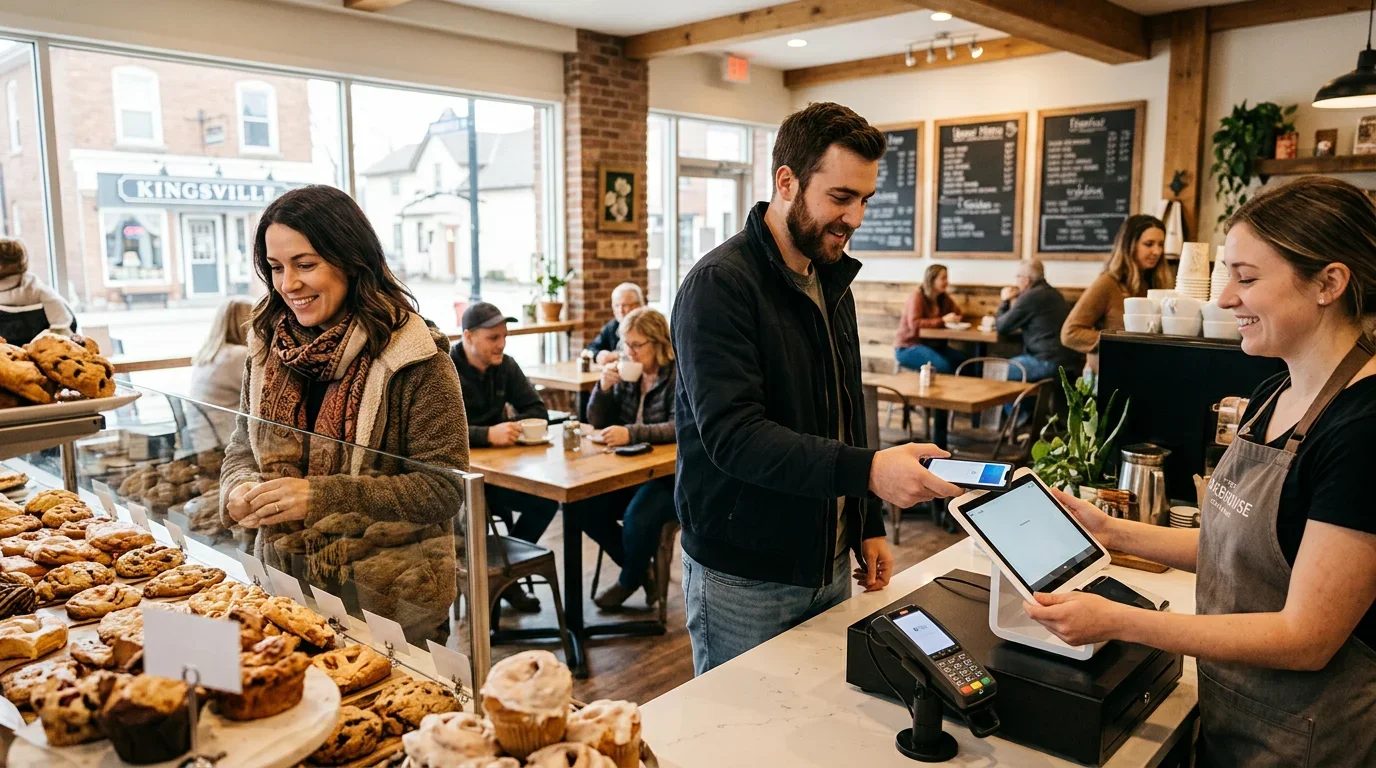
A customer walks into a small shop in downtown Windsor. They pick out a $40 gift, walk to the counter, pull out their phone, and tap to pay. The owner shakes her head. “Sorry, cash or debit only. There’s an ATM down the street.”
The customer hesitates. They look at the gift. They look at the door. They put the gift back on the counter and leave.
That sale is gone. Not because the product was wrong. Not because the price was too high. Not because the customer changed their mind about needing it. The sale died because the path between “yes, I want this” and “here is your money” had one extra step. And one extra step was enough.
This is payment friction, and it is killing more sales than most business owners realize. Worse, it is killing them silently. The customers who walk away rarely tell you why. They just do not come back.

What Payment Friction Actually Is
Payment friction is any obstacle, delay, or extra step between a customer’s decision to buy and the moment the transaction is complete. It is the gap between “I want this” and “done.”
Friction takes many forms:
- A “cash only” sign that forces a trip to an ATM
- A “we’ll invoice you” arrangement that means the customer has to remember to pay later
- An online checkout that requires creating an account before purchase
- A payment terminal that does not accept tap
- A service business that only takes cheques
- An invoice sent by mail that arrives three weeks after the job is finished
- A booking system that takes payment information on one page and reservation details on another
- A quote that says “payment due upon completion” with no mechanism to actually take payment on the spot
Each of these adds a step. Each step is a chance for the customer to pause, reconsider, get distracted, or simply give up.
The research on this is consistent and brutal. In e-commerce, every additional field in a checkout form reduces completion rates. Every additional click between cart and confirmation costs sales. The Baymard Institute, which has studied checkout abandonment for over a decade, puts the average online cart abandonment rate at around 70 percent. A meaningful chunk of that is friction: forced account creation, surprise fees at the end, limited payment options, slow loading, awkward forms.
The numbers are similar offline. Every additional step in a retail transaction, every “let me grab a different terminal,” every “the system is slow today,” every “we don’t take that card,” reduces the likelihood that the sale closes. A reasonable estimate based on retail and e-commerce data: each meaningful friction point cuts completion by 10 to 20 percent. Stack two or three friction points together and you are losing half your potential transactions before the customer even realizes they have given up.
Why Modern Customers Have Zero Patience for This
Twenty years ago, “cash or cheque” was normal. Customers expected to plan ahead, carry the right payment method, and tolerate some inconvenience. That world is gone.
Modern customers have been trained by Amazon, Uber, Stripe, Apple Pay, and Google Pay to expect frictionless payment. They tap their watch at a coffee shop. They one-click an order on their phone. They get into a vehicle, ride somewhere, and get out without ever pulling out a wallet. The transaction happens in the background.
This is not a generational preference. It is the new baseline. When a 65-year-old retiree taps their credit card at the grocery store and it works, they are being trained to expect the same experience everywhere else. When that same retiree visits your business and gets told “the machine is acting up, can you write a cheque,” they do not see it as charming or quaint. They see it as your problem being shifted to them.
The expectation is now: tap, click, done. Anything slower or more complicated has to justify itself, and most of the time, it cannot.
The Hidden Cost in Service Businesses
Retail at least has the advantage of the customer being physically present with payment in hand. Service businesses are where payment friction does the most damage, and where most owners do not even recognize the problem.
Here is the pattern. A contractor spends a day at a customer’s home installing a fence. The job goes well. The customer is pleased. At the end, the contractor says, “I’ll send you an invoice this week.” Everyone shakes hands. The contractor packs up and leaves.
What happens next:
- Day 3: Contractor gets back to the office, creates the invoice, emails it
- Day 4: Customer sees the email, thinks “I’ll handle that this weekend,” forgets
- Day 11: Contractor sends a polite “just following up” email
- Day 18: Customer pays half, mentions cash flow is tight this month
- Day 32: Second follow-up email
- Day 45: Final payment received
Forty-five days from job completion to full payment. During those 45 days, the contractor has paid for materials, paid their crew, paid fuel, and possibly taken on the next job using the same working capital. The “successful” sale is actually a six-week cash flow hole.
Now compare that to the same job with payment friction removed. The contractor finishes the fence. They pull out a phone or tablet, generate the invoice on the spot using a mobile invoicing tool, and hand it to the customer with a tap-to-pay terminal or a payment link. The customer pays in 90 seconds. The contractor drives home with the money in the bank.
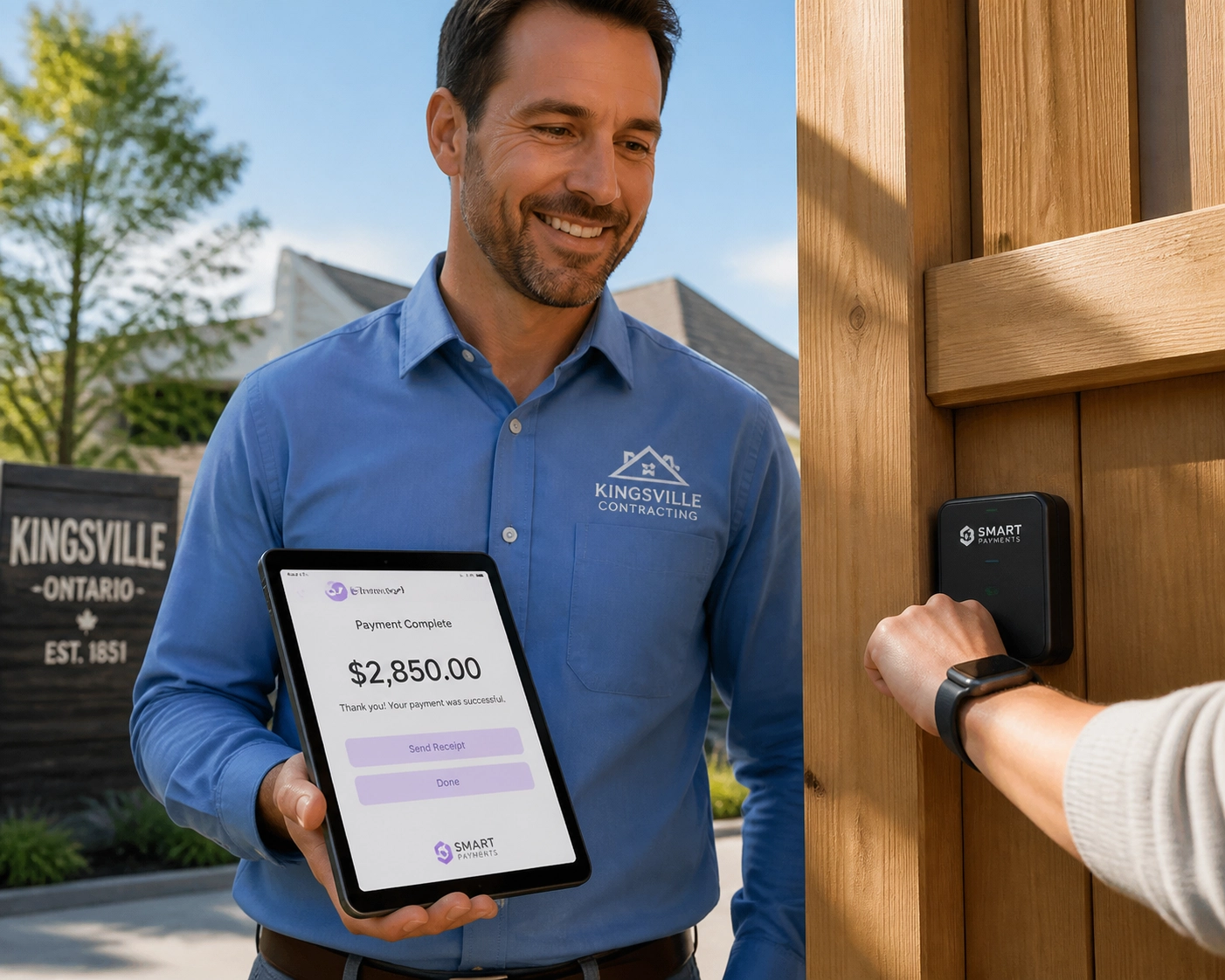
Same job. Same customer. Same price. The only difference is the absence of friction. One outcome is a healthy business. The other is a business that is constantly chasing its own income. This is the heart of why so many service businesses struggle with cash flow despite being busy, and it ties directly into the broader problem of unpaid invoices and slow payment cycles that drain operating capital over time.
Common Friction Points by Business Type
Different business models create different friction patterns. Here is what to look for.
Retail and Hospitality
The big friction points in retail are limited payment methods, slow terminals, and awkward checkout flow.
- Cash or debit only: This eliminates anyone who is trying to earn credit card rewards, anyone who is short on cash, and anyone who simply does not carry cards anymore. Tap-to-pay should be table stakes.
- No contactless option: Customers who are used to tapping will hesitate at insert-and-PIN.
- Slow or unreliable terminals: Every “the system is slow today” comment teaches the customer that paying here is a hassle.
- Tip prompts that confuse: Overly aggressive tip screens in retail contexts (where tipping is not expected) create awkward moments that customers remember.
Service Businesses (Trades, Repair, Cleaning, Landscaping)
The friction here is almost entirely on the back end.
- No on-site payment capability: The contractor leaves the site without taking payment.
- Paper invoices mailed days later: The customer has emotionally moved on from the job by the time the invoice arrives.
- No online payment option on the invoice: Customer has to write a cheque or visit a bank.
- No automated reminders: The contractor has to personally chase every overdue invoice, which is uncomfortable and time-consuming.
Professional Services (Consultants, Accountants, Agencies, Coaches)
The friction here is around recurring billing and project-based payment.
- Manual monthly invoicing: Every month the consultant has to remember to send invoices, then chase the late ones.
- No retainer or auto-pay setup: Clients have to consciously approve each payment, creating monthly decision points where they might reconsider.
- Quotes without deposit mechanisms: Projects start without a financial commitment, leading to scope creep and slow payment.
Online and E-commerce
The friction here is in the checkout flow.
- Forced account creation: Guest checkout should always be an option.
- Too many form fields: Every unnecessary field costs sales.
- Limited payment options: No Apple Pay, no Google Pay, no PayPal means losing customers who default to those methods.
- Surprise shipping costs at the end: This is the single largest cause of cart abandonment.
What Removing Friction Actually Looks Like
The solutions are not exotic. The tools exist, they are affordable, and they take a few hours to set up. The barrier is not technology. It is awareness and willingness to change the habit.
For a Kingsville, Ontario retailer, removing friction looks like a modern point-of-sale system that accepts every common payment method, processes transactions in under three seconds, and emails receipts automatically. Square, Clover, and Helcim all offer this at small-business pricing.
For a Windsor-Essex region contractor, removing friction looks like a mobile invoicing app (QuickBooks, Jobber, Wave, FreshBooks) connected to a tap-to-pay reader. The contractor finishes the job, generates the invoice on their phone, and takes payment on the spot. If the customer needs to pay later, the invoice includes a “pay now” button that takes a credit card or bank transfer.
For a professional services firm, removing friction looks like recurring billing through Stripe, a clear retainer agreement, and auto-pay enrollment as part of onboarding. The client pays once on the first of the month, automatically, without having to think about it.
For an online business, removing friction looks like a checkout that auto-fills addresses, accepts every major digital wallet, shows shipping costs early, and offers guest checkout by default.
In every case, the goal is the same: shrink the distance between decision and completion to as close to zero as possible.
The Speed Payoff
When you remove payment friction, three things happen.
More sales close. The customers who would have walked away because of a missing payment option, or abandoned a checkout because of an extra step, actually complete the transaction.
Cash arrives faster. Instead of waiting 30, 45, or 60 days for invoiced payment, you get paid the same day, sometimes within minutes. For service businesses, this single change can transform cash flow from a constant problem into a non-issue.
Customer experience improves. Customers like businesses that are easy to deal with. The act of paying is usually the last interaction a customer has with you on any given transaction. If that interaction is smooth, the whole experience feels professional. If it is awkward, it colours their memory of everything that came before.
There is also a fourth, less obvious benefit: you stop spending your own time chasing payment. The hours you currently spend following up on invoices, sending reminder emails, having uncomfortable phone calls, and reconciling late payments can go back into actual work. For most small business owners, this is several hours a week.
A Practical Checklist
If you want to start fixing payment friction in your business this week, run through this list.
- Audit every payment method you accept. Can a customer pay with the method they prefer, including tap-to-pay, digital wallets, credit cards, and online transfer?
- Time your checkout or invoice process. From “yes, I’ll buy” to “payment complete,” how many seconds or days does it take? Anything over 60 seconds in retail, or 24 hours in services, is too long.
- Identify your friction points. Where do customers hesitate, ask questions, or delay? Those are the gaps.
- For service businesses, get a mobile payment solution. A tap-to-pay reader and a mobile invoicing app together cost less than $50 per month and pay for themselves in the first week.
- For recurring revenue, set up auto-pay. New clients enrolled in auto-pay from day one will never become a collection problem.
- For online businesses, enable digital wallets. Apple Pay and Google Pay convert mobile shoppers at a much higher rate than card-entry forms.
- Build payment language into your sales process. Stop saying “I’ll send you an invoice.” Start saying “I can take payment now, here are the options.”
The change in language alone is worth doing. The customer who hears “I can take payment now” understands that paying on the spot is the normal expectation. The customer who hears “I’ll send you an invoice” understands that paying later is the normal expectation. You are training the customer either way. Train them in the direction that helps you.
The Cost of Doing Nothing
The hardest part of payment friction is that it is invisible. You cannot see the customer who walked out of the shop because tap-to-pay was not available. You cannot see the prospect who closed the browser tab because the checkout was confusing. You cannot see the client who decided not to refer you to a friend because paying was a hassle.
What you can see is the slow drip of effects: cash flow that is always tight despite being busy, accounts receivable that keeps growing, hours per week spent chasing payment, the nagging feeling that the business should be more profitable than it is.
These are not separate problems. They are symptoms of the same thing. Friction between the customer’s decision to buy and the moment you get paid. Every business has it. Most have more than they realize. And almost all of it is fixable in a weekend.
Get Help Setting Up Frictionless Payments
If your business is losing sales to clunky payment options, or if you are spending hours every week chasing invoices that should have been paid the day the job was finished, Doorways Into Your Business can help you fix it. Paul Hughes works with small and medium businesses across the Kingsville, Ontario and Windsor-Essex region to set up modern payment systems: tap-to-pay terminals, mobile invoicing, online checkout, and recurring billing that actually works. Book a free consultation at https://blog.diyb.ca/contact-diyb and stop letting payment friction kill your sales.